
Strengthen your crops: the role of Calcium, Magnesium and Silicon before flowering
The advanced vegetative phase is the foundation of a successful harvest. If the plant's structure fails now, no flowering fertiliser will save production.
Many growers focus exclusively on NPK, forgetting that the plant needs "armour" to bear the weight of the buds. Without a solid base of calcium, magnesium and silicon, plants suffer deformities, leaf necrosis and growth blockages that appear precisely when they need the most energy.
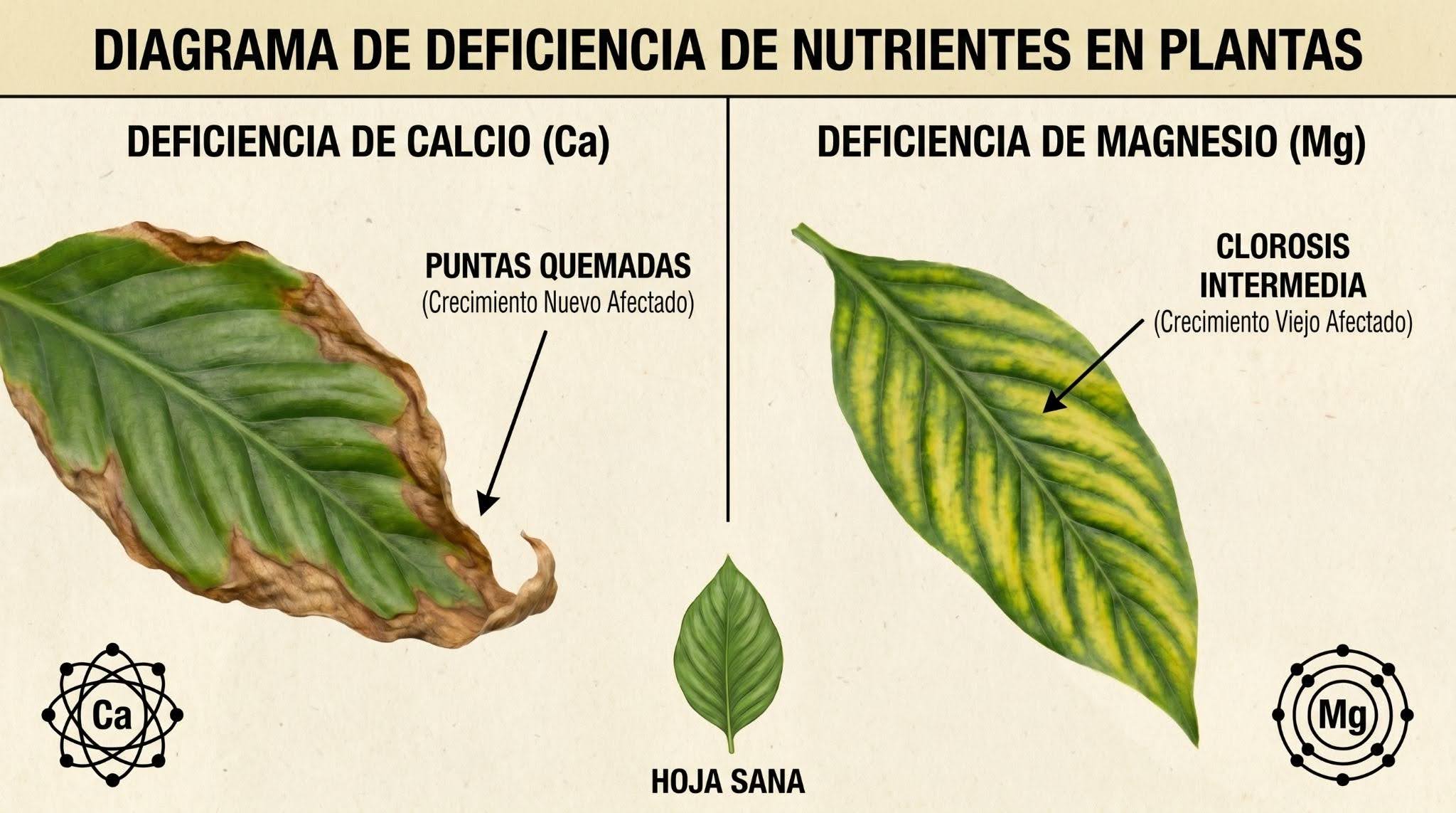
Have you come across branches that bend or deficiencies that appear out of nowhere when changing the photoperiod?
The problem is not a lack of food, but a lack of structural strength.
Calcium and Magnesium: the pillars of cellular health
To avoid deficiencies in intensive systems or under LED lighting, where metabolism accelerates, the supply of T-One Cal+Mag is critical.
- Calcium (CaO 3.25%): the cement of the cell walls. A correct supply ensures powerful root development and prevents necrosis at the leaf tips.
- Magnesium (MgO 1.25%): the core of the chlorophyll molecule. Without it, photosynthesis declines, directly affecting the weight and uniformity of the flowers.
- T-One Cal+Mag solves these problems with a fast-absorbing nitric formula, ideal for correcting common deficiencies in high-performance indoor crops.
Silicon: the protective shield against environmental stress
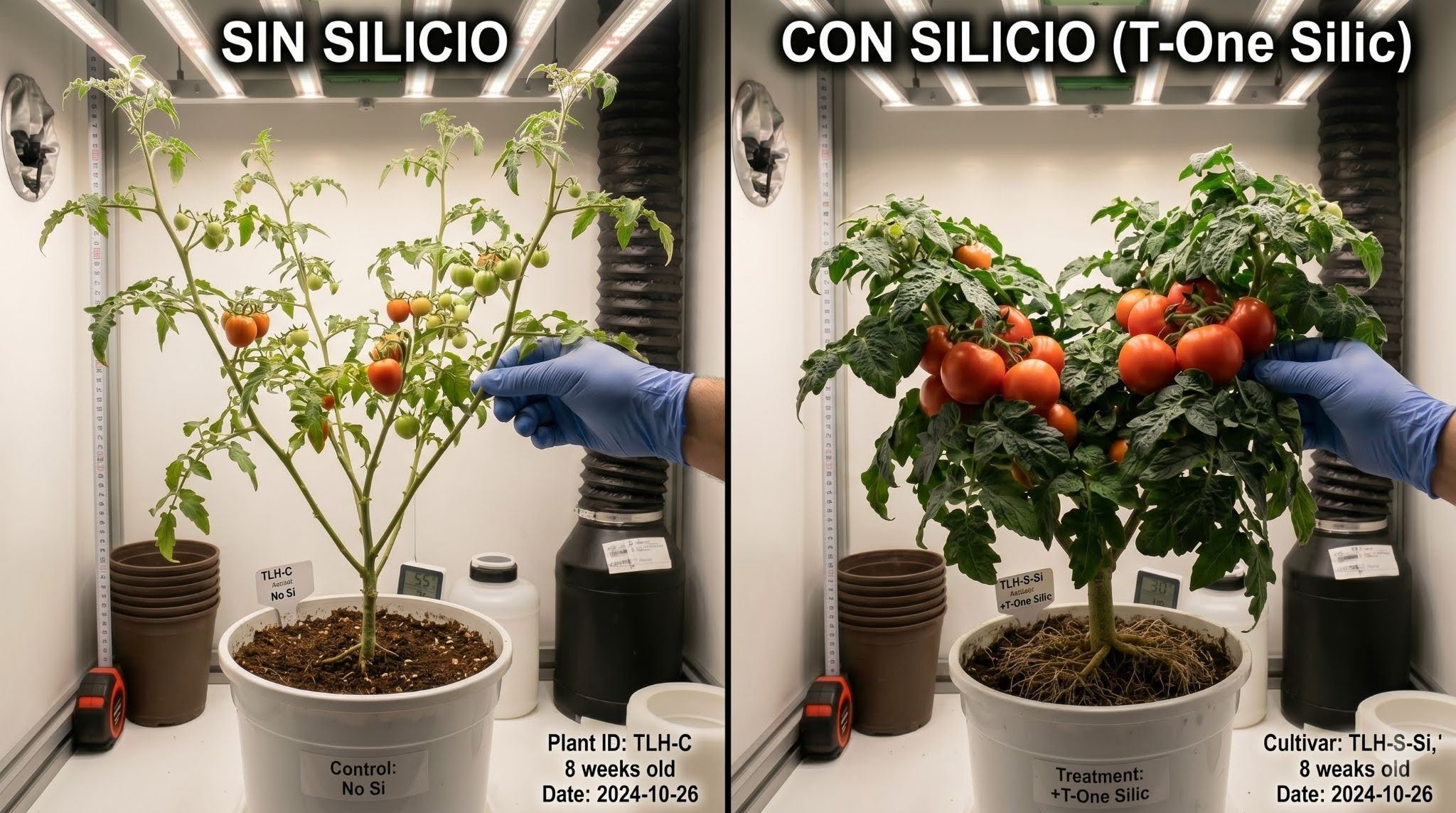
If calcium is the cement, silicon is the steel that reinforces the structure. T-One Pro Silic provides 28% silicon oxide to create a physical barrier against pathogens and heat stress.
Benefits of using Silicon in the pre-flowering phase:
- Mechanical reinforcement: thicker stems able to support dense flowers without excessive staking, thanks to the reinforcement of the cell walls. It also provides greater resistance to fungi and insects.
- Phosphorus optimisation: it releases phosphorus from the soil. It acts as a catalyst, improving the absorption of nutrients essential for future flowering (N, P and all nutrients in general).
- Heat-cold resistance: it helps plants withstand stress: they transpire better, favouring the control of water loss, and resist high temperatures under the lights, drought and low temperatures.
- Technical strategy: how and when to apply these additives. To achieve professional results, the integration of these products must be consistent.
Quick Tips for Structural Prevention
- Anticipate the LED: LED lighting increases the demand for Calcium and Magnesium; increase the dose by 20% if you notice a lack of vigour.
- Foliar silicon: Use foliar applications of Silic on mother plants to obtain stronger cuttings with better rooting.
- pH control: the chelated iron in Cal-Mag ensures availability even if the pH fluctuates slightly.
- Cell wall: Apply Cal+Mag from the first weeks to ensure that every new cell is born with a strong wall.
- Root synergy: Combine these additives with the microlife of Mico Dust to maximise the absorption surface.